
_287.png)
_71.png)
_140.png)
_365.png "Eco-Responsible Racking and Circular Economy: Towards the Green Warehouse")
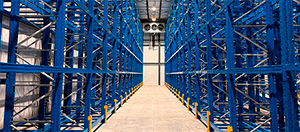
 Palettier sélectif
 Palettier statique condensé
 Palettier dynamique
 Palettier à gravité
 Palettier mobile
 Racking Industriel
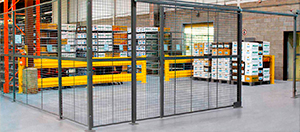
 Grille en acier
At a time when sustainability has become a strategic imperative, the logistics sector is changing. Often misperceived as a simple assembly of inert steel, the storage (racking) system nevertheless offers a major lever to reduce the carbon footprint of a supply chain.
Adopting a circular economy approach not only achieves your ESG (Environmental, Social and Governance) objectives, but also generates substantial savings when redeveloping or expanding your facilities.
The 4 pillars of green racking
[ Recycled Steel ] ─► [ Reconditioning ] ──► [ Eco-design ] ──► [ Reuse ]
1. Low-carbon and recycled steel
Steel is an infinitely recyclable material. Favoring pallet racks made from recycled steel or produced via low-emission electrical reinforcements significantly reduces the initial carbon embodied footprint of the infrastructure.
2. The market for repackaging and reuse
Replacing a complete system with new hardware is no longer the only option. Buying re-inspected and certified used racking gives a second life to tons of steel. In addition, when moving, buying or refurbishing your own existing structures avoids burying and unnecessary extraction of resources.3. Eco-design and modularity
Opting for modular and scalable structures ensures that the system can be reconfigured, expanded or adapted to future types of loads without having to replace everything. Less waste, more longevity.4. Ecological and local finishes
Powder coating processes with low VOC emissions (Volatile Organic Compounds) and steel treatments without toxic solvents improve indoor air quality within the warehouse while reducing pollution during manufacturing.Environmental impact and certifications
|
Evaluation Criteria |
Traditional Racking (New Steel) |
Circularity Racking (Reused/Recycled) |
|
Carbon footprint (Manufacturing) |
High (Extraction and initial melting) |
Reduced from 60% to 80% |
|
Useful life |
Project-specific |
Extended by reconfiguration and reinspection |
|
LEED / BREEAM contribution |
Minimum (except recycled steel) |
High (Materials & Resources Categories) |
|
Return on investment (ROI) |
Standard |
Accelerated (Lower acquisition cost) |
How to integrate the circular economy into your project?
- Perform an audit of existing structures: Before discarding your old racks, call upon an engineer or a specialist to assess their structural integrity. Very often, a simple replacement of damaged studs or the addition of column protectors is enough to bring the system back up to standard.
- Require certification of used equipment: If you purchase refurbished equipment, make sure it meets current safety standards (certified load capacities and compliance with building codes).
- Planning for end-of-life from the design stage: Choose bolted rather than welded joints when possible, in order to facilitate disassembly, transport and subsequent recycling of components.


