
_140.png)
_849.png)
_364.png)
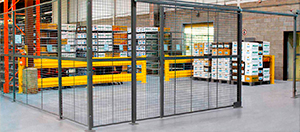
_679.png "Value-added product storage: How to turn your racking into a smart vault")
 Cloisons grillagées
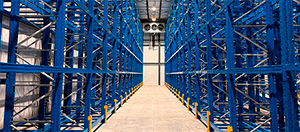
 Palettier sélectif
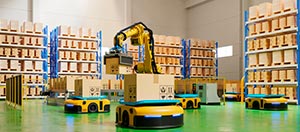
 L’automatisation
A theft, a degradation or an inventory error on these references can be costly, both financially and in terms of reputation. So, how to move from a simple storage to a high security solution integrated into your racking?
1. Why has securing racking become a priority?
Storage at a height (racking) is space-efficient, but it exposes goods to several risks if not protected:- The unknown shrinkage: Internal or external flights.
- Accidental Damage: A handling by untrained or unauthorized personnel.
- Insurance requirements: More and more contracts require partitioned storage areas to cover expensive goods.
2. Physical solutions: Partition to better reign
The first step of security relies on robust physical barriers. The objective is to create a "warehouse in the warehouse".- The anti-fall and anti-intrusion mesh: Install bottom panels of rack and side partitions in steel mesh. This prevents products from falling out and blocks access through adjacent aisles.
- Lockable rack doors: Transform your storage bays into giant wire mesh cabinets. These doors (swinging or sliding) allow access to the lower levels (picking).
- Drawers for heavy loads: For small, high-value items, the installation of pull-out drawers directly into the rack allows segmentation of stock and facilitates visual control.
3. Access control: Who, what, when?
Physically securing is a good start, but knowing who accesses the stock changes the game. Modern access control is no longer limited to a single key.Advanced technologies:
- The RFID or NFC badge: Each operator has a unique badge. The opening of the screened areas or lockers is only done after authentication.
- Biometrics: For extremely sensitive products (drugs in pharmacies, precious metals), fingerprint or facial recognition eliminates the risk of losing a badge.
- Connected locks: They record every opening and closing, creating a real-time audit history.
4. Monitoring and traceability: The digital eye
To complete the device, monitoring technology must be coupled with the shelving:- Intelligent video surveillance: Cameras pointed at high-value areas, capable of triggering an alert if a movement is detected outside working hours.
- Weight and presence sensors: Intelligent shelves that detect in real time if a unit has been removed from the rack without being scanned into the system.
By transforming your standard racking into a controlled and intelligent system, you secure the future of your supply chain.


